Table of Contents
Toggle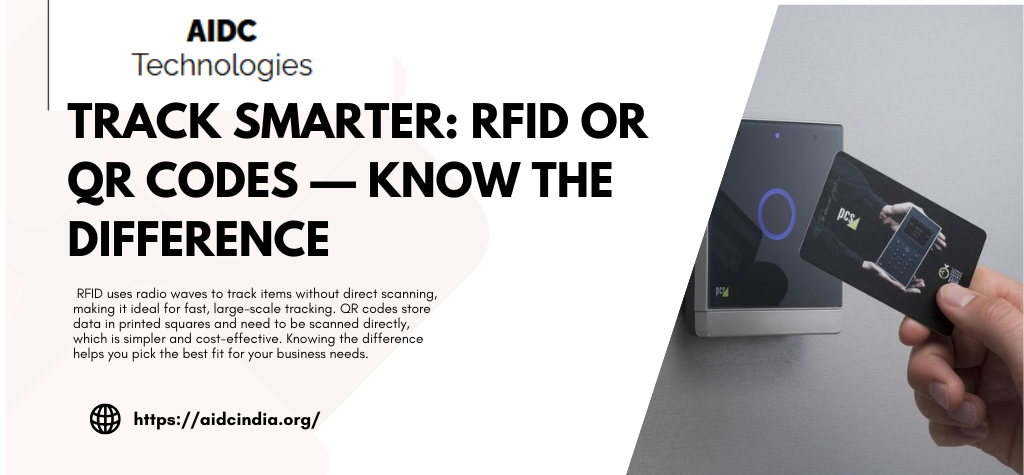
RFID Definition (Radio Frequency Identification) uses radio waves to identify and track items without the need for direct line-of-sight, making it perfect for inventory management and access control. It allows real-time data updates for enhanced security.
QR (Quick Response) codes are 2D barcode scanners that store data and require near-range scanning. Due to their low cost and ease of use, QR codes are commonly used in marketing, payments, and authentication.
In today’s digital landscape, both RFID and QR code technologies help businesses improve operations, but they serve different purposes. Understanding the RFID Definition, as well as how it compares to QR codes, is crucial when choosing the right system for your needs.
What Is RFID?
RFID stands for radio frequency identification. It is a wireless technology that lets a tag and a reader send and receive data. One of the biggest advantages of RFID is that it doesn't require line-of-sight. You can scan multiple items at once from several feet away. According to the RFID Definition, this technology is particularly effective in warehouse management, logistics, and automated manufacturing.
What Are QR Codes?
QR codes are easy-to-use tools that store information in a grid of black and white squares. They’re scanned using mobile phones or handheld devices. While not as advanced as RFID, they serve everyday functions well, especially in retail and marketing. Unlike RFID, QR codes cannot be updated once created. They also require manual, one-by-one scanning. However, their low cost and ease of use make them perfect for campaigns, digital menus, and small businesses.
RFID vs QR Codes: Key Differences
Technology Used
- RFID Definition: Radio frequency waves and wireless scanning.
- QR Codes: Optical scanning using camera or laser.
Data Interaction
- RFID: Stores editable, encrypted data.
- QR: It needs to be read very closely, about a foot or two away. .
Scanning Distance
- RFID enables tags to be read from a great distance.
- QR: Needs to be closely scanned, no more than a foot or two away.
Efficiency
- RFID Definition allows bulk scanning in seconds.
- QR codes require individual, manual scans.
Cost and Use Cases
QR codes are very inexpensive and easy to implement. RFID, while more costly initially, delivers long-term value for businesses that require automation and security. As described in the RFID Definition, these systems offer unmatched performance in environments like factories, hospitals, and large warehouses. QR codes, by contrast, are ideal for customer interactions, feedback forms, or menus.
Security and Durability
The RFID Definition emphasizes encryption and secure access. RFID tags can be designed to resist harsh environments, weather, and physical wear. QR codes, however, are printed on paper or labels and can be damaged easily. They’re also more susceptible to tampering or phishing.
Speed and Automation
RFID enables real-time data updates and fast processing of multiple assets. This makes RFID ideal for companies that need fast, automated systems for logistics, supply chain, or inventory tracking. QR codes are slower and better suited for small-scale applications.The RFID Definition states that RFID has a competitive advantage in large-scale operations because to its speed and automation.
Which One Should You Use?
If your business needs quick customer interactions and simple data display, go with QR codes. But if you’re looking for automation, real-time tracking, and strong data security, RFID is the better option. The RFID Definition highlights its potential to revolutionize inventory management and streamline workflows in ways that QR codes simply cannot match.
About AIDC Technologies India
At AIDC Technologies India, we deliver expert solutions based on your business goals. Whether you're looking to implement secure RFID systems or easy-to-use QR codes, we guide you through every step—from consultation to setup. Understanding the RFID Definition is the first step to transforming your operations. Let our experts help you make the right decision for your company.
Need help choosing between RFID and QR codes for your business? Contact us today for expert guidance!
FAQs
Q1. What’s the main difference between RFID and QR codes?RFID uses radio signals to read tags from a distance. QR codes need to be scanned close up with a phone or scanner.
Q2. Which one is better for tracking inventory?RFID works better for tracking because it reads many items at once and shows real-time updates.
Q3. Are QR codes cheaper than RFID?Yes, QR codes are very cheap to make and print. RFID costs more but gives extra features.
Q4. Is RFID safer than QR codes?Yes, RFID can keep data secure with encryption. QR codes are easier to copy or misuse.
Q5. Can I use both RFID and QR codes in my business?Yes, many companies use both. RFID helps with tracking, and QR codes are good for customers to scan.