What is RFID Technology?
RFID, or radio frequency identification, is a wireless communication technology that automatically detects and tracks items using electromagnetic fields. It plays a critical role in various industries such as retail, healthcare, logistics, and manufacturing by offering efficient tracking and data capture solutions. RFID tags contain electronically stored information, which can be read by RFID readers, providing instant access to relevant data.
How RFID Technology Works
At its core, RFID consists of three components: tags, readers, and antennae. Depending on the power supply, the RFID tag—which can be active, inactive, or semi-passive—starts the process. Active RFID tags have their power source, whereas passive tags rely on energy from the RFID reader.
Components of RFID Technology
- RFID Tag: Each tag consists of an integrated circuit (IC) for storing information and an antenna for transmitting data to the reader.
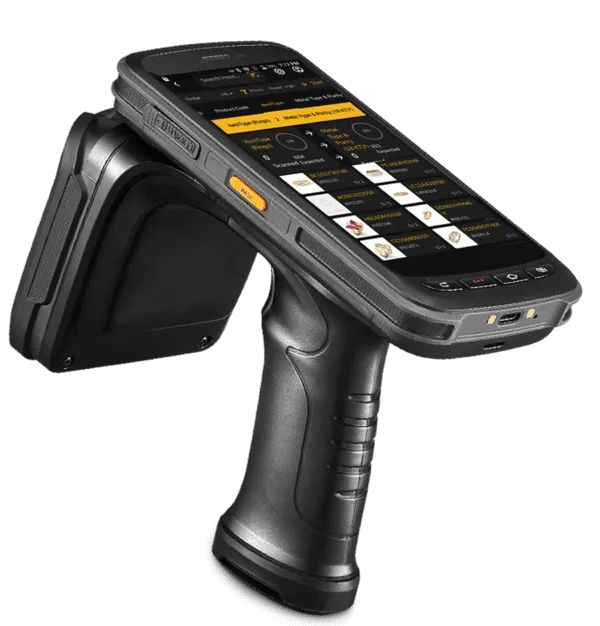
- RFID Reader: The reader emits radio waves that activate the tag and gather the data stored in the tag.
- Antenna: The antenna facilitates communication between the tag and reader by sending and receiving radio waves.

Types of RFID Tags
- Passive RFID Tags: These tags have no internal power source. They rely on the electromagnetic energy emitted by the RFID reader to power the tag.
- Active RFID Tags: Equipped with their battery, these tags can transmit signals over longer distances and are used for tracking larger assets.
- Semi-Passive RFID Tags: These tags have an internal power source but rely on the reader for communication. They are often used in monitoring applications that require real-time data.
The Communication Process
The RFID reader transmits a signal that activates the RFID tag. The tag then sends the stored information back to the reader, which processes the data. The system can work even without direct line-of-sight, making it more efficient than barcodes, which require scanning one at a time
 .
.
Frequency Ranges of RFID Technology RFID systems operate in different frequency ranges based on the application:
- Low-Frequency (LF): Ideal for short-range applications such as animal tracking and access control.
- High-Frequency (HF): Commonly used in ticketing, payments, and data transfer applications.
- Ultra-High-Frequency (UHF): Preferred for long-range asset tracking, logistics, and inventory management.

Applications of RFID Technology
RFID technology has transformed various industries by enabling efficient tracking, data management, and process automation.
- RFID in Retail Retailers has adopted RFID to streamline inventory management, reduce theft, and enhance customer experience. With RFID tags on products, retailers can conduct faster stock counts and automate restocking processes.
- Inventory Control Throughout the supply chain, real-time product visibility is made possible with RFID technology. By tagging products, retailers can quickly locate items, maintain accurate stock levels, and minimize stock-outs.
- Anti-theft measures RFID can be integrated into electronic article surveillance (EAS) systems to prevent theft. RFID tags are difficult to remove without deactivation, providing better security than traditional barcode systems.
- RFID in Healthcare In healthcare, RFID technology is used for tracking medical equipment, managing patient information, and improving operational efficiency.
- Patient Tracking Hospitals use RFID wristbands for patients, which allow for instant identification, medication tracking, and better patient care. It minimizes human errors in treatments and administration.
- Equipment and Asset Management RFID is employed in asset tracking, enabling hospitals to keep track of medical equipment like wheelchairs, defibrillators, and infusion pumps. This ensures that life-saving equipment is always available when needed.
- RFID in Logistics and Supply Chain In the logistics industry, RFID is used to improve visibility across the supply chain by tracking shipments in real time. It ensures more efficient deliveries and helps reduce errors.
- Enhanced Supply Chain Visibility RFID allows businesses to track goods from the manufacturing stage through to delivery, improving traceability and reducing the chances of lost or delayed shipments.
- Warehouse Automation Many warehouses use RFID systems to automate the inventory management process. It reduces manual labour, speeds up sorting and picking, and enhances overall operational efficiency.
- RFID in Manufacturing Manufacturers use RFID for monitoring production processes, controlling inventory, and improving quality control. RFID tags provide real-time data on the location and condition of products and raw materials.
- Tracking Production Processes RFID ensures that all components are where they need to be during the assembly line process. This helps streamline production and reduce delays.
- Quality Control Manufacturers can use RFID to track components through every stage of production. It enables them to identify defective parts, improving product quality and reducing recalls.
Key Benefits of RFID Technology
- Improved Efficiency RFID technology automates many manual processes, saving time and reducing labour costs. For instance, stock inspections might be done manually when inventory management is done automatically.
- Faster Data Access With RFID, data retrieval is almost instantaneous. This immediate access to information helps businesses make quicker and more informed decisions, improving overall performance.
- Enhanced Accuracy Because RFID tags are read automatically without the need for manual scanning, the chances of human error are drastically reduced. This increases the accuracy of data collection, be it inventory levels, patient details, or asset locations.
- Increased Security RFID tags can be encrypted, making it difficult for unauthorized individuals to access or manipulate data. This is crucial in industries like healthcare and finance, where sensitive information needs protection.
- Real-Time Tracking and Monitoring One of the greatest benefits of RFID is the ability to track items in real-time. Whether it’s monitoring the location of a product in a warehouse or ensuring the safety of a patient in a hospital, RFID technology provides up-to-the-minute information.
- Better Asset Utilization With RFID, businesses can monitor asset usage and ensure that high-value equipment is used optimally. It also reduces the likelihood of loss or theft, as assets are constantly being tracked.
- Cost Savings While the initial investment in RFID technology can be substantial, the long-term savings from improved efficiency, reduced errors, and enhanced security more than make up for the cost. Companies often see a strong return on investment (ROI) within a few years.
RFID Challenges and Considerations
Cost of Implementation The cost of setting up an RFID system, including purchasing tags, readers, and software, can be high. Businesses must consider their long-term needs and evaluate the potential ROI before implementing the technology.
Data Privacy Concerns With RFID tracking, there is a concern over the misuse of collected data. Companies need to implement stringent privacy policies to protect customer and employee data.
Problems with Interference Liquids and metal objects can cause interference with RFID systems. High-frequency RFID systems are less affected by these issues, but businesses must evaluate their environment before deployment.
Conclusion: The Future of RFID Technology
RFID technology is poised for continued growth as businesses look to automate processes, improve efficiency, and increase transparency across various operations. Its ability to provide real-time tracking, reduce errors, and streamline operations makes it a valuable investment in industries ranging from retail to healthcare.
As RFID systems become more affordable and efficient, their applications will only expand, leading to more innovation and higher adoption rates across the globe.
AIDC Technologies India: Your RFID Solutions Partner
AIDC Technologies India delivers cutting-edge RFID solutions for businesses in retail, healthcare, logistics, and manufacturing. Their systems enable organizations to monitor assets, streamline inventory management, and strengthen security. With scalable and customizable solutions, AIDC helps businesses cut operational costs, enhance data accuracy, and gain real-time insights across all processes.
FAQs on RFID Technology
Q1. Which industries can benefit from RFID technology?
Industries such as retail, healthcare, logistics, and manufacturing use RFID for efficient tracking and data management.
Q2. How does RFID outperform barcodes?
Unlike barcodes, RFID does not need line-of-sight scanning, provides instant data access, and allows real-time monitoring.
Q3. What types of RFID tags exist?
There are three main types: passive (no internal power), active (battery-powered), and semi-passive (battery-assisted communication).
Q4. Can RFID help with inventory control?
Yes, RFID ensures accurate stock levels, reduces human errors, and streamlines restocking processes.
Q5. Is RFID technology secure?
Yes, RFID data can be encrypted, preventing unauthorized access and safeguarding sensitive information.
Book Now AIDC Technologies to deploy advanced RFID solutions and optimize your business operations.