Inventory management helps businesses keep the right products available at the right time without spending too much on stock. Whether a company operates a warehouse, retail store, manufacturing unit, or distribution centre, effective stock management supports daily operations and customer satisfaction.
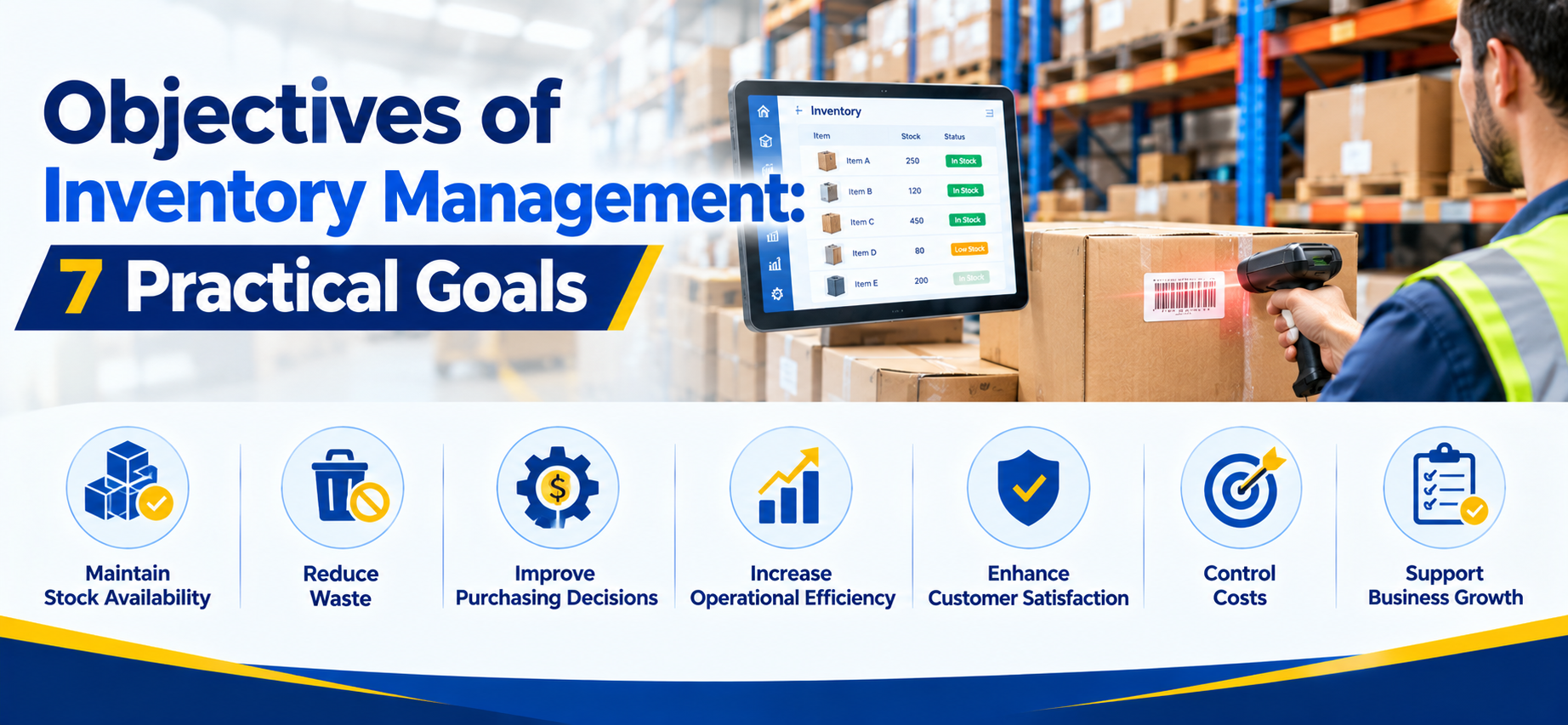
Understanding the objectives of inventory management helps businesses control costs, prevent shortages, reduce waste, and make better purchasing decisions. Here are seven practical goals that businesses can use to improve inventory control.
What Are the Goals of Inventory Management?
The objectives of inventory management are the goals a business follows to purchase, store, track, and distribute products efficiently. These goals help maintain a balance between customer demand and available stock.
Without proper inventory control, businesses may purchase unnecessary products, lose sales because of shortages, or struggle with inaccurate stock records. A clear inventory management process helps teams monitor stock movement, plan replenishment, and use storage space effectively.
7 Key Objectives of Inventory Management 2026.
- Maintain the Right Stock Availability
One important goal is keeping enough products available to meet customer demand. Businesses need to avoid shortages while preventing unnecessary purchases.
For example, a retailer selling popular products should monitor sales trends and replenish fast-moving items before they run out. This helps maintain product availability and support reliable order fulfillment.
- Reduce Inventory Holding Costs
Storing inventory involves expenses such as warehouse space, insurance, handling, and product maintenance. Excess stock can increase these holding costs and tie up money that could support other business activities.
Businesses can review slow-moving products, improve purchasing schedules, and maintain suitable stock levels to support inventory cost reduction.
- Prevent Overstocking and Stockouts
Overstocking happens when businesses hold more products than they need, while stockouts occur when required products are unavailable. Both problems can affect sales, storage capacity, and customer satisfaction.
Using demand forecasts, reorder points, and sales records helps businesses decide when and how much to replenish.
- Minimize Waste and Product Damage
Products can expire, become outdated, or get damaged during storage. This is particularly important for food, healthcare supplies, electronics, and seasonal goods.
Businesses should follow proper storage practices, rotate stock where appropriate, and monitor expiry dates. These measures help reduce avoidable losses and improve inventory utilization.
- Improve Inventory Accuracy
Accurate stock records help businesses understand how many items are available and where they are stored. Differences between recorded and actual quantities can lead to purchasing mistakes and delayed orders.
Regular stock audits, barcode scanning, and RFID inventory management can help teams record stock movements more consistently and identify discrepancies.
- Support Better Purchasing Decisions
Purchasing decisions should reflect actual demand, supplier lead times, and current inventory levels. Buying too early or ordering excessive quantities can increase costs.
By reviewing sales history and supplier performance, businesses can plan purchases more effectively and establish suitable inventory replenishment schedules.
- Improve Cash Flow and Order Fulfillment
Inventory represents money invested in products. Holding unnecessary quantities can restrict cash available for salaries, equipment, and other operating expenses.
Effective inventory optimization helps businesses balance stock availability with purchasing requirements. When products are easier to locate and prepare, teams can also process orders more efficiently.
How Does Inventory Management Help Businesses?
Effective inventory management connects purchasing, warehousing, sales, and distribution. It helps teams identify fast-moving products, manage storage space, reduce avoidable expenses, and fulfill orders more reliably.
Clear stock records also improve communication between departments. When purchasing teams can see current quantities and sales teams understand product availability, businesses can make decisions using more consistent information.
How Can Businesses Achieve Inventory Management Goals?
Businesses can improve inventory control through a few practical steps:
- Conduct regular stock audits: Compare physical quantities with inventory records to identify discrepancies.
- Forecast demand: Use sales history and seasonal patterns to estimate future requirements.
- Set reorder points: Establish when products should be replenished based on demand and supplier lead times.
- Use tracking technology: Barcode scanners help record product movements, while RFID systems can identify tagged items using radio waves.
- Review inventory reports: Monitor slow-moving stock, stockouts, damaged goods, and purchasing patterns.
AIDC Technologies provides Automatic Identification and Data Capture solutions, including barcode and RFID technologies, that can support inventory tracking and stock visibility. Choosing suitable technology depends on product type, operating environment, budget, and integration requirements.
To learn more about the business and discuss your requirements contact our official website.
For more information about our services visit our Inventory tracking system.
Conclusion
The objectives of inventory management include maintaining stock availability, controlling holding costs, preventing shortages, reducing waste, improving accuracy, supporting purchasing decisions, and strengthening cash flow. Businesses can work toward these goals through regular audits, demand planning, clear replenishment rules, and suitable tracking systems. A well-organized inventory process helps businesses make informed decisions and manage stock more efficiently.
Frequently Asked Questions
- What are the main objectives of inventory management?
The main objectives are to maintain suitable stock levels, reduce holding costs, prevent shortages, minimize waste, improve accuracy, support purchasing, and manage cash flow.
- Why are objectives of inventory management important for businesses?
They provide clear goals for managing stock, controlling expenses, meeting customer demand, and reducing operational problems caused by excess or insufficient inventory.
- How does inventory management help reduce costs?
It helps limit unnecessary purchases, reduce storage expenses, identify slow-moving goods, and prevent losses caused by expired or damaged products.
- How can businesses prevent overstocking and stockouts?
Businesses can forecast demand, set reorder points, monitor sales trends, and consider supplier lead times when planning replenishment.
- How do barcode and RFID systems improve inventory management?
Barcode systems record stock movements through scanning. RFID systems use radio waves to identify tagged items. Both can support more consistent tracking and inventory visibility when properly implemented.